

Separate the Day from the Gathering
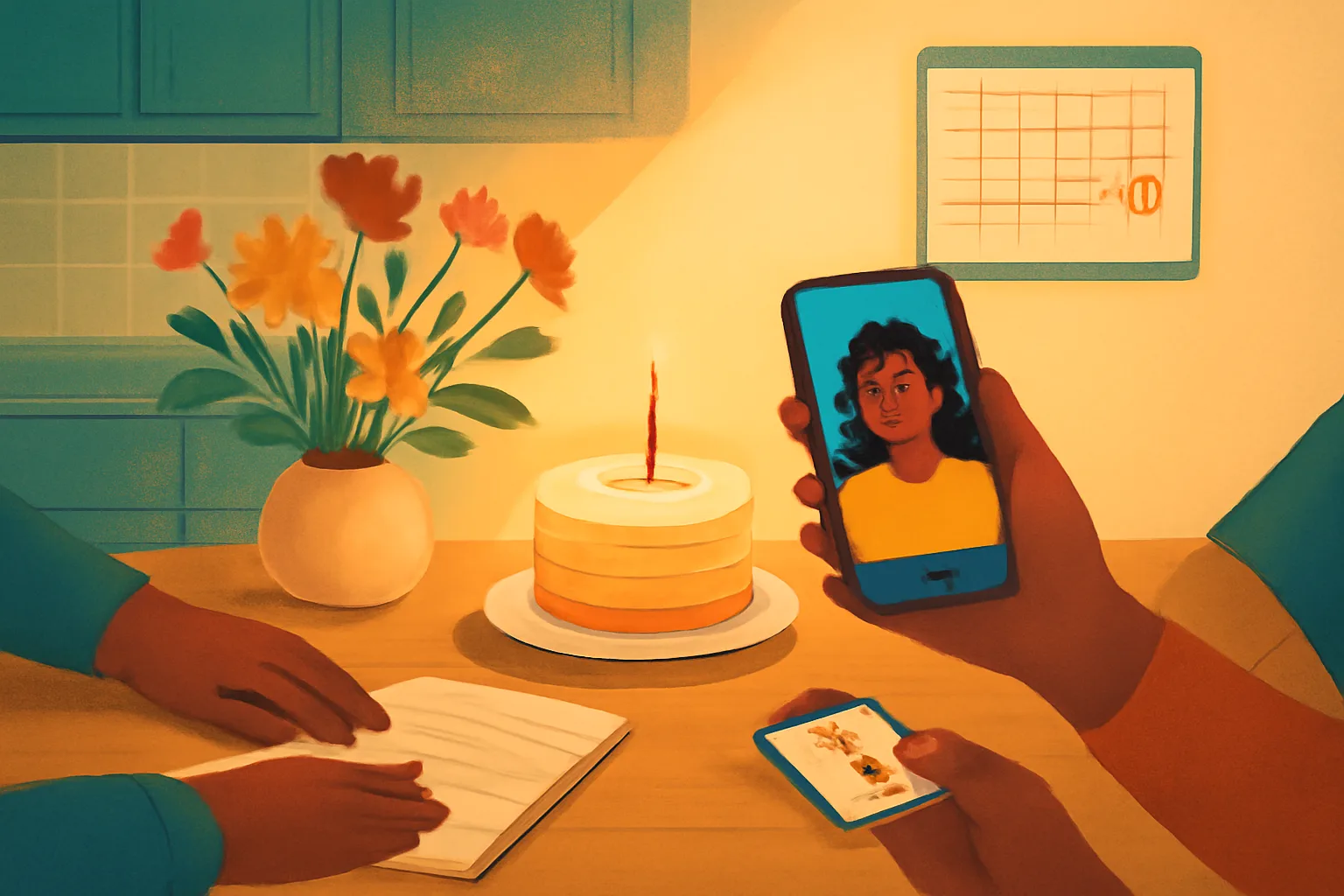
The actual date can stay meaningful even when the full celebration has to move. A birthday on a Tuesday is still the birthday, just as Diwali on Sunday, 8 November 2026, is still worth acknowledging on the day even if relatives meet later. Treat the date as one moment and the larger meal, outing or party as another.
Keep the on-the-day gesture small and specific: a call before work, a voice note, cake delivery, flowers, a prayer, or the person's favourite meal. Then choose a convenient date for everyone else. A simple message can remove any awkwardness: "We'll celebrate properly on Sunday, but today is still yours." The person shouldn't have to wait until the weekend to feel remembered.
Map Everyone's Real Availability
Start with fixed commitments, not hopeful guesses. Write down office hours, school timings, exams, tuition, shifts, travel and family responsibilities. If Bhai Dooj falls on Wednesday, 11 November 2026, for example, someone may be able to call at lunch but not attend a long family meal until the weekend.
Ask for available windows instead of asking, "When is everyone free?" That question often creates a chat with twelve replies and no decision. Try: "Can you do Tuesday after 7:30 pm, Saturday morning or Sunday after lunch?" Use a shared calendar, a WhatsApp poll or one group message, and give everyone a reply deadline. Planning should not become another long-running family project.
Pick the Right Celebration Size
Match the celebration to the schedule. An exam day may call for a five-minute call; a school day may suit breakfast before class; an office birthday could be a quick lunch; and a full meal may belong on the nearest suitable weekend. Small doesn't mean careless when the gesture is chosen well.
Decide who needs to be present for the meaningful moment and who can join later through a call, video message or photo. The person being celebrated shouldn't have to manage everyone else's timings. Choose one organiser to collect replies, make the final call and tell the group what's happening. For a child, that might mean one parent handles school coordination while another arranges the cake.
Build a Two-Part Plan
Make an "actual day" plan with one or two clear actions. It could be a message scheduled for 12:01 am or 8 am, a packed-lunch note, a small dessert after school, or a family video call. Keep the action realistic. A warm voice note sent before an exam can mean more than a surprise that makes the person late.
Then make a "gathering day" plan with the date, start and end time, location or video link, food, transport and responsibilities. Say who is bringing what, rather than leaving everything to the host. Add a backup: dinner at home if travel fails, or a call the next evening if the first one gets cancelled. A plan feels calm when it has somewhere to go after a small delay.
Work Around Exams and Shifts
During exams, keep wishes warm but low-pressure. Send something that doesn't demand an immediate answer: "No need to reply today, just wanted you to know we're thinking of you. We'll celebrate after your paper, and you can choose the food." Put the bigger plan after the last exam so the occasion becomes a reward, not another task on the study list.
Shift workers may be awake at unusual hours, so offer two short options instead of one long event. Try tea before work and dessert after the shift, or celebrate when they wake up rather than at a standard dinner time: "Your celebration is happening on your schedule. We can meet before your shift, after you wake up, or send the party to you." For schoolchildren, check school, tuition and bedtime schedules. A manageable surprise is kinder than a late-night production.
Keep Long-Distance People Included
Give relatives and friends one clear role. They can record a 10-second message, choose a song, send a handwritten card, arrange a delivery or join one planned call. Clear roles make it easier for people to participate without creating ten separate calls for the person whose day is already full.
Combine messages into a short video or shared album, so the recipient gets something personal without having to answer everyone immediately. For time-zone differences, plan greetings around the recipient's routine and write the local time clearly in the invitation. "Please send your video by 6 pm IST on Friday" is much more useful than "Send it sometime tomorrow." The FreeWishes wish writer can also help turn a quick thought into a message that sounds personal before you add it to the group plan.
Use Ready-to-Send Messages
For postponing the gathering, send: "The date is important, even if the dinner has to wait. Let's celebrate properly on Sunday when we can be together." It acknowledges the real day instead of making the person feel as if the occasion has been cancelled. You can add a practical detail, such as "I'll call you after work today, and I'm ordering your favourite dessert."
For an exam day, try: "No need to reply today, just wanted you to know we're thinking of you. We'll celebrate after your paper, and you can choose the food." For a shift worker, use: "Your celebration is happening on your schedule. We can meet before your shift, after you wake up, or send the party to you." Short messages work best when they sound like something you would actually say.
Close the Calendar Gap
Add both dates to the family or personal calendar: the actual occasion and the planned gathering. Set reminders for buying gifts, ordering food and sending messages. For recurring dates, add one reminder a week ahead and another one or two days before. Keep useful notes too, such as a favourite cake, delivery address or the usual exam period.
The FreeWishes festival calendar can help when several occasions arrive close together, such as Diwali on 8 November 2026, Govardhan Puja on 9 November and Bhai Dooj on 11 November. Finish by confirming everything in one message: who is doing what, when the on-the-day gesture will happen and when everyone will meet. That final note closes the gap between a good intention and a celebration people can actually enjoy.