

1. Choose a Simple Keepsake Format
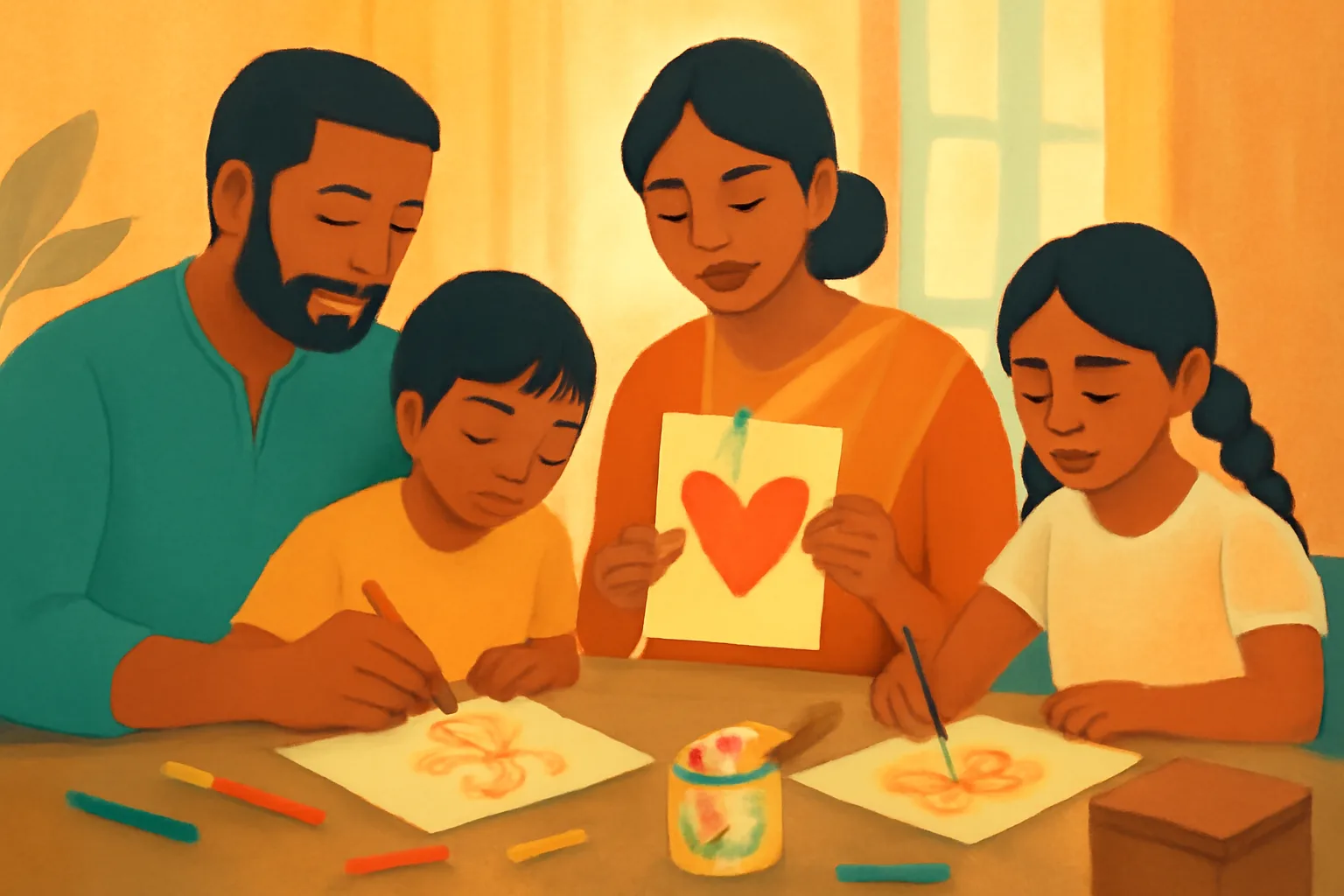
Start by choosing a format that matches the time you have. A folded paper booklet works well for a family afternoon, while a decorated envelope is perfect when you have only a few minutes. You could also use a jar of message slips, one scrapbook page or a phone-made digital PDF. The best format is the one you'll actually finish.
For a family keepsake, make one page per child so each personality has room to shine. In a classroom, create one shared book or one decorated envelope for each student. A4 sheets, crayons, sketch pens, glue, ribbon, an old box and recycled packaging are more than enough. Before you begin, decide what you're saving: exact words, a drawing, a wish, a photograph or a small mix of all four.
2. Gather Materials in Ten Minutes
Keep the main kit small: paper or a notebook, pencils or crayons, scissors, glue or tape, markers and an envelope or box for storing the finished pieces. If you're making a booklet, a few A4 sheets and a stapler may be all you need. For a no-mess version, use a file, paper folder or an old gift box with a fresh label.
Optional details can make the keepsake feel especially personal. Add a child's photo, handprint, ticket from a Children's Day event, a leaf, ribbon or scrap of gift wrap. Before the activity starts, label the storage envelope with the date, the child's name or preferred name, age or class and place. For a group activity, prepare one prompt sheet and one clearly marked folder or envelope per child so pages don't get mixed up.
3. Ask Questions That Invite Real Answers
Offer two or three prompts instead of handing over a long worksheet. Try "My favourite part of today was...", "If I could give the world one gift...", "When I feel happy, I..." or "A message for future me is...". Imagination-led prompts can be just as revealing: "Design a school on the moon," "Draw your perfect celebration" or "If your toy could talk, what would it say?"
Let children answer in the way that feels natural to them. They can write, draw, use symbols, dictate to an adult, record a voice note or say a few words that you write down exactly. This mini template is useful: "Today is ____. I am ____ years old/in Class ____. My wish is ____. I want to remember ____." Don't correct spelling or turn their answer into an adult's sentence. A surprising phrase may become the most treasured part later.
4. Make the Child the Co-Designer
Let the child choose the title, colours, cover picture and place for each answer. The keepsake should feel made with them, not made about them. Invite them to add a self-portrait, handprint, signature, invented superhero, family doodle or a drawing of something they love right now. You may think the purple sun needs explaining; years later, it may be exactly the detail everyone remembers.
Ask permission before including a photograph, personal story or message from another person, especially in a classroom or shared family book. For younger children, offer choices and help with cutting or writing while leaving their marks visible. Uneven letters, upside-down figures and surprising spellings are part of the memory. If a child prefers not to answer a prompt, let them skip it or choose a different one.
5. Assemble the Keepsake
For a paper booklet, fold three or four A4 sheets, then staple or tie the spine. Use pages for "About me", "My Children's Day", "My wish" and "A note from someone who loves me". A message jar is even simpler: cut paper into strips, write one prompt at the top of each strip, let everyone contribute and label the jar with the date and the child's age or class.
For a classroom book, give each child one A4 page with the same small header: name, date and prompt. Bind the pages with ribbon or place them in a decorated file. Add a short adult note, not a long speech. You might write, "You loved drawing planets today and asked for extra blue. I hope you always keep asking big questions." A specific observation will mean more than a polished paragraph.
6. Add a Future-Opening Moment
Write a clear opening date on the cover, such as "Open on Children's Day 2030" or "Read on your 10th birthday". Choose a realistic place to keep it, too: a labelled box in a cupboard is better than a secret hiding spot everyone forgets. Ask the child to make one prediction, such as "What will I be learning?", "What might I love then?" or "What advice will future me need?"
For a yearly tradition, leave one page or envelope empty for next Children's Day. Repeat the same two prompts alongside one new question, so you can see what changes and what stays. If the child is too young to understand a future date, adults can record why the moment mattered and revisit it when the child is older. The goal isn't perfect time-capsule language; it's giving the child a small promise that their voice will be remembered.
7. Protect the Memory for Years
Let glue and paint dry fully before storing the finished work. Keep paper flat in a labelled envelope, archival folder or sturdy box away from damp, direct sunlight and pests. Photograph or scan important pages as a backup, then save the files in two places. A clear filename such as "Aarav_Children'sDay_2026" makes it easier to find later.
Avoid laminating original artwork if you may want to write on it later. A clear sleeve or acid-free page protector is a simpler option. For a digital keepsake, combine photographs, typed answers and a short audio clip into one private folder or PDF. Check the child's and family's consent before sharing anything online, especially pages made in a classroom. A memory can stay meaningful without becoming public.
8. End with a Small Family Tradition
Finish with one shared line everyone can say or write: "We will remember this Children's Day because...". Take a picture of the making, with permission, rather than only photographing the final craft. The messy table, missing crayon and serious concentration may become part of the story. If you're saving the image, label it with the same date as the keepsake.
Close with a warm note the child can keep: "No matter how much you grow, these curious, kind and funny parts of you will always be worth remembering." You could also add the child's favourite snack, a tiny joke or the name of a game played that day. Small details often bring a memory back faster than a grand message.