

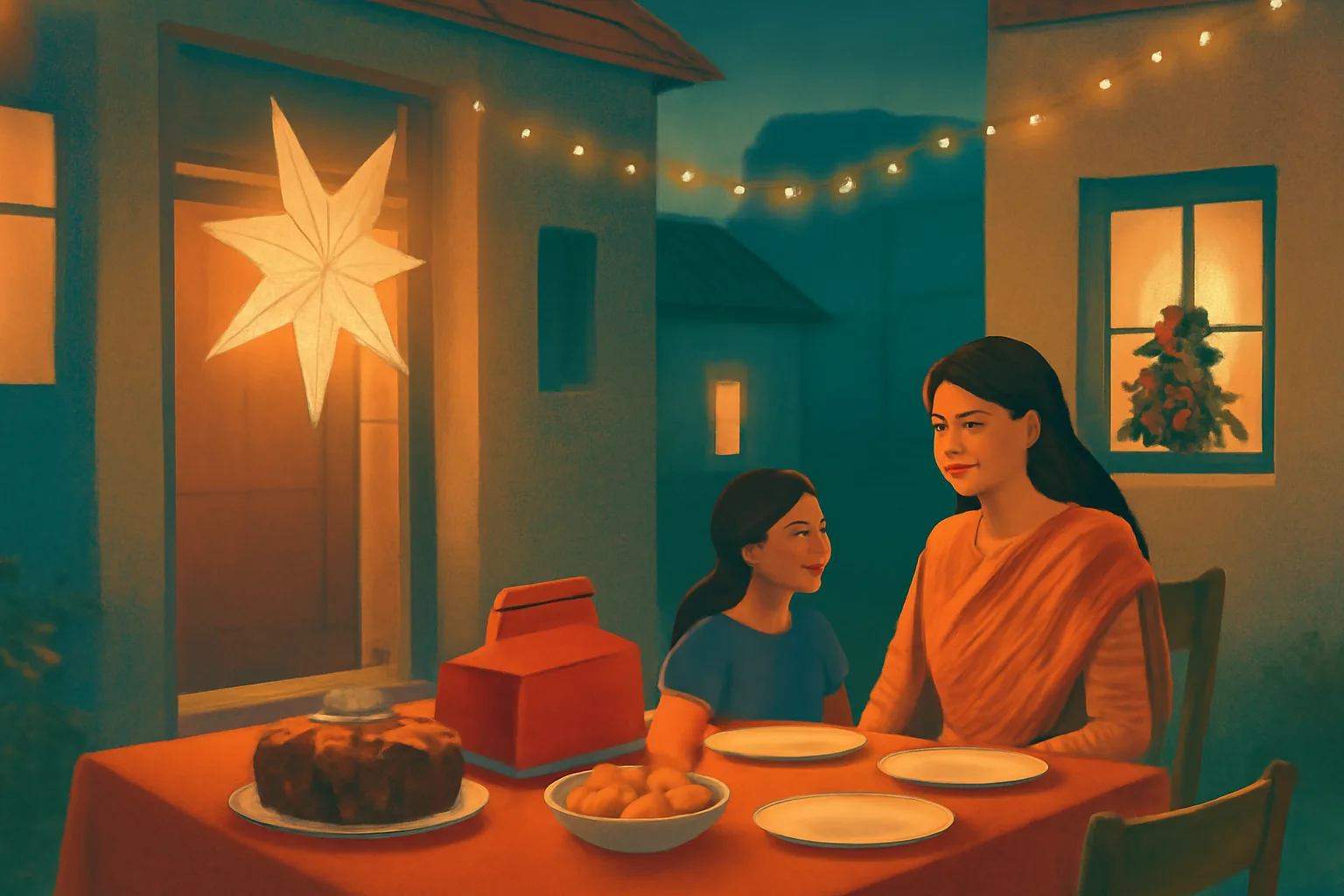
Christmas at a Glance
Christmas is celebrated on 25 December to mark the birth of Jesus Christ. Christmas Eve falls on 24 December and is often an important part of the celebration, with church services, family preparation, carol singing or a late-night gathering. In 2026, Christmas Day falls on Friday, 25 December. ([incredibleindia.gov.in](https://www.incredibleindia.gov.in/en/festivals-and-events/christmas?utm_source=openai))
There is no single "Indian Christmas". Indian Christians belong to many denominations and communities, and celebrations may take place in English, Malayalam, Konkani, Tamil, Hindi, Bengali or another local language. Family history, region, church tradition and personal preference all shape the day.
Christmas is a public holiday in India, while the scale of celebration varies from a quiet family meal to a full neighbourhood programme. Some Christian communities also observe the weeks of Advent, attend carol services, or continue festive observances towards Epiphany in January. The most familiar part, though, is simple: worship, food, family, friendship and generous good wishes.
How Christmas Is Celebrated Across India
For many Christians, Christmas includes a Christmas Eve service or Midnight Mass, prayers, hymns, Bible readings and time with the church community. Others attend a morning service on Christmas Day, join a family prayer at home or celebrate mainly through food and visiting. It's best not to assume that every Christian family attends Mass or follows the same denomination.
Regional colour makes Christmas in India especially varied. Goa is known for church feasts, carols and festive sweets such as bebinca, while Kerala homes may gather around meals, decorations and church services. Parts of the Northeast have strong Christian traditions, music and community celebrations. In Mumbai, Bengaluru, Chennai, Delhi and Kolkata, churches, schools, bakeries, markets and neighbourhoods often add their own city flavour. ([incredibleindia.gov.in](https://www.incredibleindia.gov.in/en/festivals-and-events/christmas?utm_source=openai))
At home, families may put up a tree, hang a star or wreath, arrange a crib, light the balcony and exchange gifts. Carol groups sometimes visit homes, while schools, housing societies and churches may organise programmes, charity drives or community meals. These practices are common but not universal, so let the family or community show you what matters to them.
Christmas Eve and Christmas Day
In the days before Christmas, homes may be cleaned and decorated, cakes ordered or baked, gifts wrapped and special dishes prepared. On Christmas Eve, some people attend a service, sing carols or visit relatives. On 25 December, the rhythm often turns towards family, friends, a generous meal and unhurried conversation.
Gift-giving varies too. Some families open presents at midnight after a service; others wait until Christmas morning. Some prioritise church and prayer, while others begin with breakfast, visit relatives or sit down to a long lunch. None of these choices makes a celebration more or less genuine.
If you're joining someone else's celebration, ask a few gentle questions before you arrive: "Do you usually attend a Christmas Eve service?" "Should I remove my shoes at the door?" "What would be useful to bring?" and "Are there any food customs I should know about?" A safe guest gift is fruit, chocolates, cake, flowers or a small home item, unless the host has requested something specific.
Christmas Foods in India
The Christmas table in India might include rich fruit or plum cake, roast or baked dishes, pulao or biryani, bread, sweets and savoury snacks. Menus differ widely by region and household. Often, the smell of spices, baking fruit cake and warm food filling the kitchen matters as much as the finished menu.
Goan festive tables may include bebinca, dodol, neureos, kalkal and rose cookies. In Kerala, appam with vegetable, chicken or mutton stew may appear alongside other family favourites. Some families serve dishes such as sorpotel or vindaloo, while others prepare vegetarian meals, local specialities or recipes shaped by Anglo-Indian, East Indian, Mangalorean, Syrian Christian and other community traditions. Goa Tourism describes bebinca as a layered sweet made with ingredients including coconut milk, flour, sugar, egg yolk and ghee, while Kerala Tourism highlights appam and stew as a familiar regional combination. ([goa-tourism.com](https://goa-tourism.com/food/goan-sweets/?utm_source=openai))
If you're bringing food, ask first about allergies, vegetarian preferences and ingredients. It's also thoughtful to check whether a cake contains alcohol, nuts or eggs before serving or gifting it. A simple question such as "Is there anything I should avoid bringing?" can save the host from an awkward surprise and help everyone enjoy the meal.
Stars, Cribs and Christmas Decorations
The paper Christmas star is one of the most recognisable decorations in many Indian homes. It may hang outside a doorway, above a balcony or in a window, glowing from within after sunset. Some are handmade from coloured paper; others use lights, fabric, bamboo or modern materials. The star can make a home feel festive before you've even reached the front door.
A crib, or nativity scene, depicts the birth of Jesus and may be assembled at home, in a church, school or neighbourhood display. Depending on the community, it may include figures, a stable, lights, plants, painted backdrops or locally made details. Christmas trees, candles, bells, wreaths, fairy lights and handmade ornaments are also common choices. ([incredibleindia.gov.in](https://www.incredibleindia.gov.in/en/festivals-and-events/christmas?utm_source=openai))
Decorations adapt to local weather, available space and budget. A family in a small flat may keep one star and a string of lights; another may build an elaborate crib or turn the whole front garden into a festive scene. Decorations aren't a test of faith. Some families celebrate quietly through prayer, food and time together, and that is just as meaningful.
Carols, Church and Community
Carols may come from a church choir, school performance, neighbourhood group or a few friends carrying songbooks from home to home. They may be sung in English or in Indian languages such as Malayalam, Konkani, Tamil, Hindi, Bengali and other regional languages. The music can be polished and rehearsed, or wonderfully informal, the kind where someone forgets a line and everyone laughs.
Christmas services differ by church and denomination. A congregation may hold Midnight Mass, a Christmas Eve service, morning worship, special music, community prayers or more than one service to welcome everyone. Many Indian celebrations also include gatherings beyond the church: meals, cultural programmes, visits to people who are unwell or alone, and charitable activities. Official tourism guidance also notes the importance of church services, carols, decorations, gifts and community feasts in Christmas celebrations across India. ([incredibleindia.gov.in](https://www.incredibleindia.gov.in/en/festivals-and-events/christmas?utm_source=openai))
If you're visiting a service, dress neatly, arrive on time and follow the congregation's lead. Keep your phone quiet and ask before photographing people, altars, cribs or religious displays. Non-Christian guests are welcome at many celebrations, but a service is a religious gathering, not a general cultural performance or a photo opportunity.
Christmas Greetings That Feel Natural
The safest everyday greeting is simply, "Merry Christmas!" You can add warmth with, "Wishing you and your family a peaceful and joyful Christmas." If you know the person celebrates in a devotional way, "Wishing you a blessed Christmas and a happy New Year" may feel right.
For a friend, try: "Merry Christmas, my friend, hope your day is full of good food, laughter and people you love." For a family, you could write: "Sending warm Christmas wishes to your family. May your home be filled with peace, happiness and plenty of cake." For someone hosting you, say: "Thank you for welcoming me into your Christmas celebration. Wishing your home joy, peace and plenty of cake."
Short messages work beautifully on WhatsApp or Instagram: "Merry Christmas! May your day be merry, bright and wonderfully full of leftovers." Or: "Warm wishes for a joyful Christmas and a happy New Year." "Happy Christmas" is another natural greeting, especially in some British-influenced communities and families. Most importantly, don't assume a person celebrates Christmas simply because they live in a Christian-majority neighbourhood or work at a Christmas event. Let people tell you what they celebrate.
A Thoughtful Way to Join In
The warmest question is often, "How does your family usually celebrate Christmas?" It invites a story instead of asking someone to explain an entire religion or perform a tradition for you. You may learn about a favourite midnight service, a grandmother's cake recipe, a choir visit or a family dish that never appears on a restaurant menu.
Before visiting, learn one or two useful details: the family's preferred greeting, church or service plans, food customs, language and whether gifts are exchanged. If you're unsure about a ritual, watch quietly and ask later. Curiosity is welcome when it comes with respect.
Christmas in India can be devotional, cultural, family-centred, community-based or a blend of all four. You don't need to perform the perfect tradition. Bring kindness, curiosity and an appetite, then let the host show you what Christmas means in their home. If you're planning several festival messages, FreeWishes' Festival Captions and Festival & Holiday Cards can help you find a starting point without making every greeting sound copied.