

Choose the right place for each person
WhatsApp Status works well for family, neighbours, colleagues and contacts who regularly check your updates. Instagram Stories are a natural choice for friends and followers who already reply to your stories, share posts or interact with you there. The platform should feel familiar to the people you hope will see the greeting, not simply convenient for you.
Send a private WhatsApp or Instagram message when the person is especially close, the festival is personal to them, or a public post might feel too general. A useful rule is simple: use a public greeting for the wider circle and a direct message for the people you would call or visit. For example, a family group may suit "Wishing everyone a bright and joyful Diwali," while your sister may deserve "Happy Diwali, Anu! Hope you get a peaceful break, your favourite sweets and some proper rest."
Mixed audiences need a little care. Don't assume that every contact celebrates the same festival, even if several people in your list do. A line such as "Sending warm wishes for a joyful festive season" can include more people without asking anyone to explain their beliefs or traditions.
Make one card work on both platforms
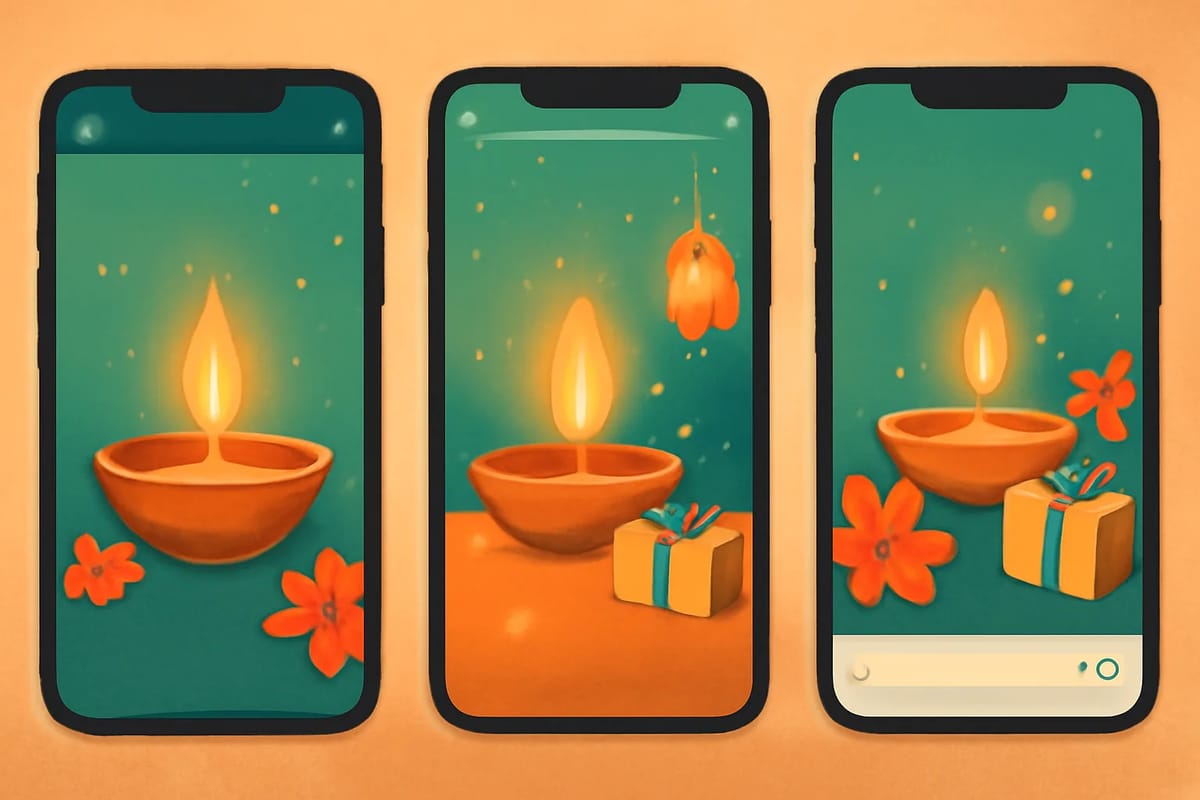
Create the main card in a vertical 9:16 format, ideally 1080 × 1920 pixels. That size fits both WhatsApp Status and Instagram Stories with less awkward cropping. Keep the name of the festival, the main greeting and any important details in the centre safe area, with breathing room at the top and bottom for profile details, reply bars and interface buttons.
One clear greeting, one visual focal point and high-contrast text usually work better than a crowded design. A card that can be read on a phone is more useful than one covered in tiny decoration. Leave enough empty space around the words so the design still feels calm when viewed quickly between messages and stories.
A simple structure could read: "Wishing you a bright and peaceful Diwali ✨ May your home be filled with light, laughter and good food." Use a diya, lantern, flower, star or other suitable visual as the focal point, then let the words do their job. The same card can move from Status to Story without looking like an afterthought.
Adapt the wording, not just the size
For WhatsApp Status, choose a warmer, slightly more familiar line because viewers may include relatives, former classmates, neighbours and local contacts. Try "Warm festival wishes to you and your family. May this special day bring light, laughter and lovely moments together." It sounds personal enough for a broad circle without pretending that you know everyone's plans.
Instagram Stories can be more concise and visual. Keep the card uncluttered, then add a short caption, emoji or suitable sticker instead of placing several extra sentences over the design. A caption such as "Celebrating light, love and good food ✨" can add personality without competing with the greeting.
Private messages need one small detail that belongs to the recipient. Add their name and a specific hope: "Hope your Eid is full of family time, and plenty of sheer khurma, Aisha!" Another adaptable template is: "Happy [festival], [name]! Wishing you [specific hope] and a beautiful day with your loved ones." That extra sentence is often what turns a shared card into a real message.
Post at the right moment
For broad visibility, share a festival wish on the morning of the festival. The evening before can also work when people are preparing, travelling or sending greetings early. If you're planning a Diwali greeting for 2026, Diwali falls on Sunday, 8 November, so a Saturday evening post or Sunday morning Status can both make sense depending on your audience.
For a multi-day festival, mention the specific day when it helps. "Happy Dhanteras" is clearer than a general Diwali message when you are posting on Friday, 6 November 2026, while a Bhai Dooj greeting belongs on Wednesday, 11 November 2026. A small date or day reference prevents the wish from seeming late or confusing.
Different observances and time zones may affect when people are ready to receive a greeting. Post according to the audience you're addressing rather than your own routine. For close contacts, a direct message or call on the day matters more than being the first person to post.
Use each platform's helpful features
On WhatsApp Status, add a short caption or follow the card with a second Status containing a personal note. One or two considered updates are usually enough; uploading ten near-identical greeting cards can make the message feel automatic. You might pair a festival card with "Thinking of everyone celebrating today, hope your homes are full of warmth."
On Instagram Stories, mention only people who would genuinely enjoy being included. A public tag can feel awkward if the person rarely posts or doesn't celebrate that festival. When the message matters, add readable text or alt text so the greeting isn't lost for people who use accessibility features or view stories with images muted.
Music, GIFs and stickers should suit both the festival and your audience. A quiet, elegant card may say more than a busy screen of effects. If you share a card made by someone else, check that it is permitted for sharing or use a credited, shareable design. Don't remove the creator's name simply to make the image look cleaner.
Make no one feel left out
A public story shouldn't be the only way you reach grandparents, close friends or contacts who rarely open the app. Send a direct message through the platform they actually use, or call if that is how you normally stay in touch. "I wanted to wish you personally, hope your Christmas is peaceful and full of people you love" will feel more meaningful than hoping they happen to see a public post.
Avoid tagging people into a festival wish when you're unsure whether they celebrate it. For a mixed audience, "Sending warm wishes for a joyful festive season" is a thoughtful neutral line. You can also prepare different versions: a family card, a work-safe card and a close-friends message with more humour or personal detail.
A reply isn't required. Share good wishes without expecting likes, reactions or a repost. Some people may be busy, travelling, observing a festival privately or simply away from their phone; the warmth of your message doesn't depend on a visible response.
A quick posting checklist
Before posting, check the spelling of the festival, each person's name and any regional greeting. Read the words aloud once. This catches small mistakes that can change the tone, especially when you're adapting a card quickly for Eid, Christmas, Baisakhi or another important occasion.
Preview the card on a phone. Is the text readable? Is the crop clean? Is the greeting visible without tapping through clutter? Check the top and bottom edges as well, since profile information and interface buttons may cover those areas on Status or Stories.
Prepare three versions from the same design: a Status version, a Story version and a private-message version with a name or personal sentence. Post once, respond kindly to replies and correct anything that could be misunderstood. If a date or festival detail changes for your community, update the wording rather than leaving a confusing version visible.
FreeWishes' Festival & Holiday Cards and festival captions can help when you need a starting point, while the wish writer is useful for turning a general greeting into a personal note. Choose the words first, then make the small platform changes.
Close with a wish that travels well
The best choice between a WhatsApp Status or Instagram Story for festival wishes is the platform where the person feels seen. Keep the card design consistent, but change the caption, timing and level of personal detail for each audience.
One card can travel far, just give each person the version that feels meant for them. A public Story can brighten a wider circle, a Status can reach familiar contacts and a private message can make someone feel remembered on a day that matters.