

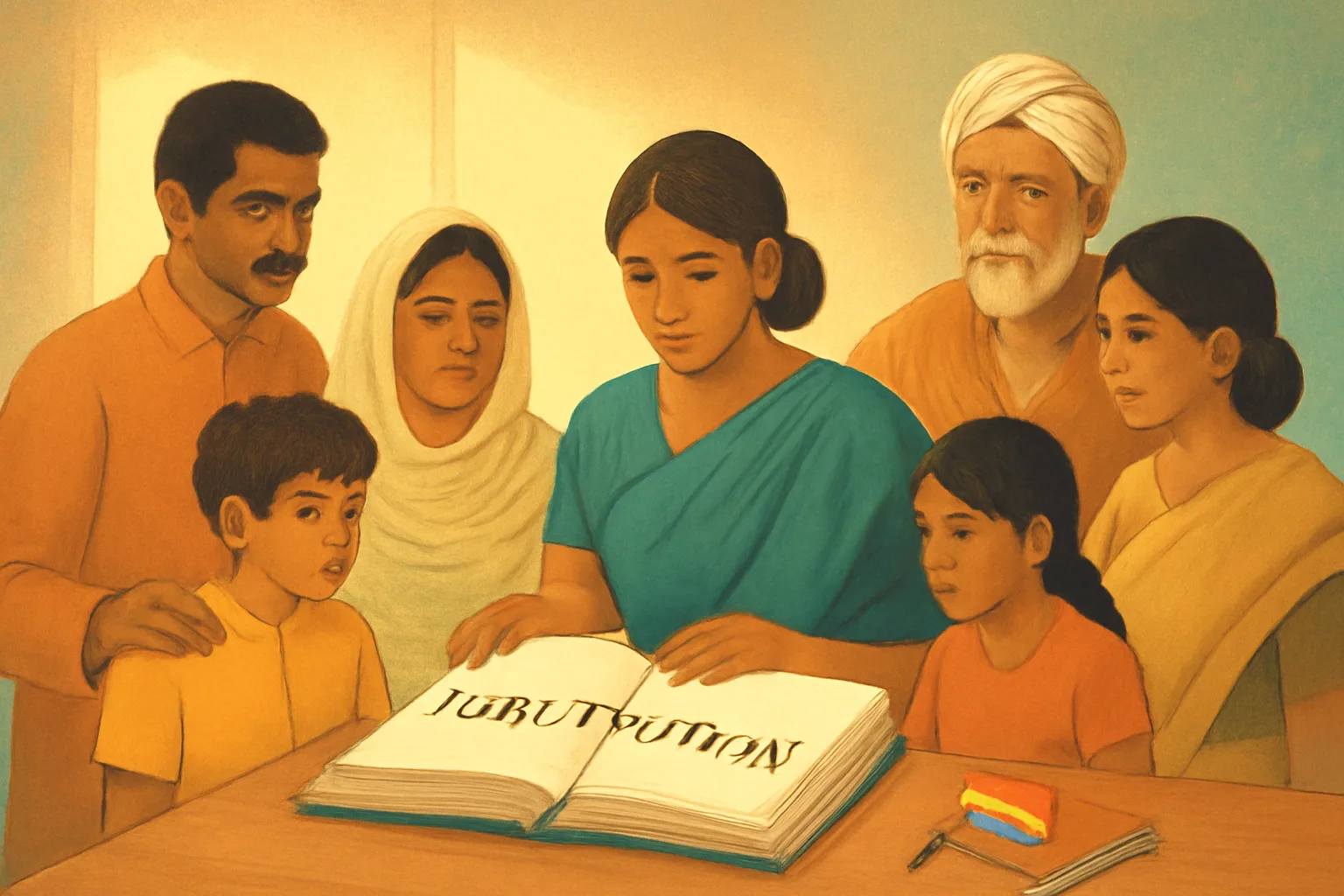
1. Start with the moment
Begin by naming the occasion clearly: Constitution Day, also known as Samvidhan Divas, is observed in India on 26 November. The day marks the adoption of India's Constitution on 26 November 1949 and invites us to think about the principles that help a diverse country live together with shared rights and responsibilities.
Before writing, choose one central idea. Equality, liberty, justice, rights, duties and democratic participation are all meaningful, but trying to include everything can make a short message feel crowded. Pick the value that best suits your audience. A school may focus on learning and fairness, while a workplace may choose dignity and inclusion.
A simple opening could be: "Today, we remember the document that gives every citizen a voice, a right to dignity and a role in our democracy." It sets a respectful tone without sounding like a chapter from a civics textbook.
2. Use plain, respectful language
Big civic ideas become easier to understand when they sound like real life. Instead of writing about an "unwavering commitment to participatory democratic principles," say, "We can listen carefully, ask questions respectfully and make space for different voices." Instead of using only the word "equality," connect it to fairness and dignity in the way people treat one another.
Keep the message hopeful and inclusive. Avoid political slogans, party references or wording that suggests some citizens matter more than others. Constitution Day is about shared values, so the message should leave room for people from different religions, languages, regions, genders, castes and backgrounds.
A useful structure is simple: remember the Constitution, connect it to daily life, then share a responsibility or hope for the future. For example: "The Constitution reminds us that dignity belongs to everyone. Let us practise that belief by treating people fairly, listening with care and standing up against exclusion."
3. Choose one message angle
For an equality-focused message, write about treating every person with dignity, regardless of religion, language, gender, region, caste or background. A line such as "Different lives, languages and traditions can still share equal respect" feels warm and specific without turning the message into a list of legal terms.
For a message about rights, mention the freedoms and protections that help people learn, speak, worship, work and live with dignity. Keep the wording broad unless you are checking the exact constitutional provision. "May we understand our rights and respect the rights of others" is safer and clearer than making a detailed legal claim in a greeting.
For duties, connect citizenship to ordinary actions: respecting others, following the law, protecting public spaces and helping the community. For democracy, highlight listening, voting, asking questions respectfully and making space for different voices. One focused idea will usually be more memorable than six hurried ones.
4. Build the message in three lines
A three-line structure works for a WhatsApp status, card, noticeboard or short speech. Line one names Constitution Day and acknowledges its significance. Line two connects the Constitution to a value or a real-life experience. Line three ends with a forward-looking wish or a small civic responsibility.
You can use this fill-in template: "On Constitution Day, we remember ____. May we protect ____ by ____, and help build an India where ____." For example: "On Constitution Day, we remember the promise of equality. May we protect it by respecting every voice, and help build an India where everyone is treated with dignity."
The final line should sound possible, not grand for the sake of sounding grand. "May we begin with the way we speak, listen and include others" gives readers something to carry into the day.
5. Ready-to-use examples
Student message: "On Constitution Day, let us remember the values of justice, liberty, equality and fraternity that guide our country. May we learn our rights, respect the rights of others and grow into responsible citizens. Jai Hind!" This works for a class group, school notice or student speech because it is respectful while still sounding natural.
Teacher or school message: "The Constitution is not only a document we read in class; it is a promise we practise every day. Let us choose fairness, respect every voice and carry its values beyond the classroom. Happy Constitution Day." It links a lesson to behaviour students can recognise and practise.
Workplace message: "This Constitution Day, may we bring its spirit of equality, dignity and inclusion into the way we work with one another. Let us listen with respect, act responsibly and help create spaces where every voice can contribute." The wording stays professional without becoming stiff.
Family message: "Today, we honour the Constitution that gives our diverse country a shared promise of justice and equality. May our family practise respect, responsibility and kindness in the small choices we make every day." It brings a national occasion into ordinary family life, where values are often shown through small actions.
6. Make it fit the platform
For WhatsApp, keep the message to three to five lines, with one clear idea and an optional "Happy Constitution Day" at the end. A short message is easier to read in a busy group: "Equal dignity, shared responsibility and respect for every voice. This Constitution Day, let us practise the values that strengthen our democracy. Happy Constitution Day."
For Instagram, start with a strong first line, then add two or three sentences about equality, rights or duties. "A democracy grows stronger when every voice is heard" makes a direct opening. Follow it with a personal thought and avoid filling the caption with hashtags; one or two relevant tags are enough if you use them.
For a school assembly or speech, add one everyday example, such as including a classmate, respecting a different opinion or caring for a public space. For a card or noticeboard, choose a compact line such as "Different voices, equal dignity, one democratic promise." Short words can still carry weight when the idea is clear.
7. Check before you share
Make sure the message says "Constitution Day" or "Samvidhan Divas" clearly if readers need to understand the occasion. A beautiful line about equality can lose its context when it is shared on its own, especially in a school, office or family group where people may be reading quickly.
Check that your wording is inclusive and does not reduce the Constitution to only one religion, region, language or community. Also avoid presenting a personal opinion as a constitutional fact. If you use a quotation or exact Preamble wording in quotation marks, confirm the text first rather than relying on memory.
Read the message aloud before sharing it. If it sounds like a civics textbook, replace one abstract phrase with a warm, everyday example. "Let us respect every voice in our classroom" is easier to feel and understand than "Let us uphold the principles of inclusive participation."
8. A final line to carry forward
A Constitution Day message does not need to lecture people about citizenship. Close with a short wish that leaves the reader encouraged: "May we not only celebrate the Constitution today, but live its values in the way we treat one another." It is broad enough for a school, workplace, family or public post.
You can also adapt this final template: "Happy Constitution Day. May equality guide our choices, responsibility shape our actions and democracy remain strong through every voice." Change one phrase to match your audience, then keep the rest simple.
The strongest message is often the one that sounds like a promise people can keep. Respect someone's opinion, include someone who is being left out, care for a shared space or learn a little more about the rights and duties of citizenship. That is how a short greeting becomes meaningful.