

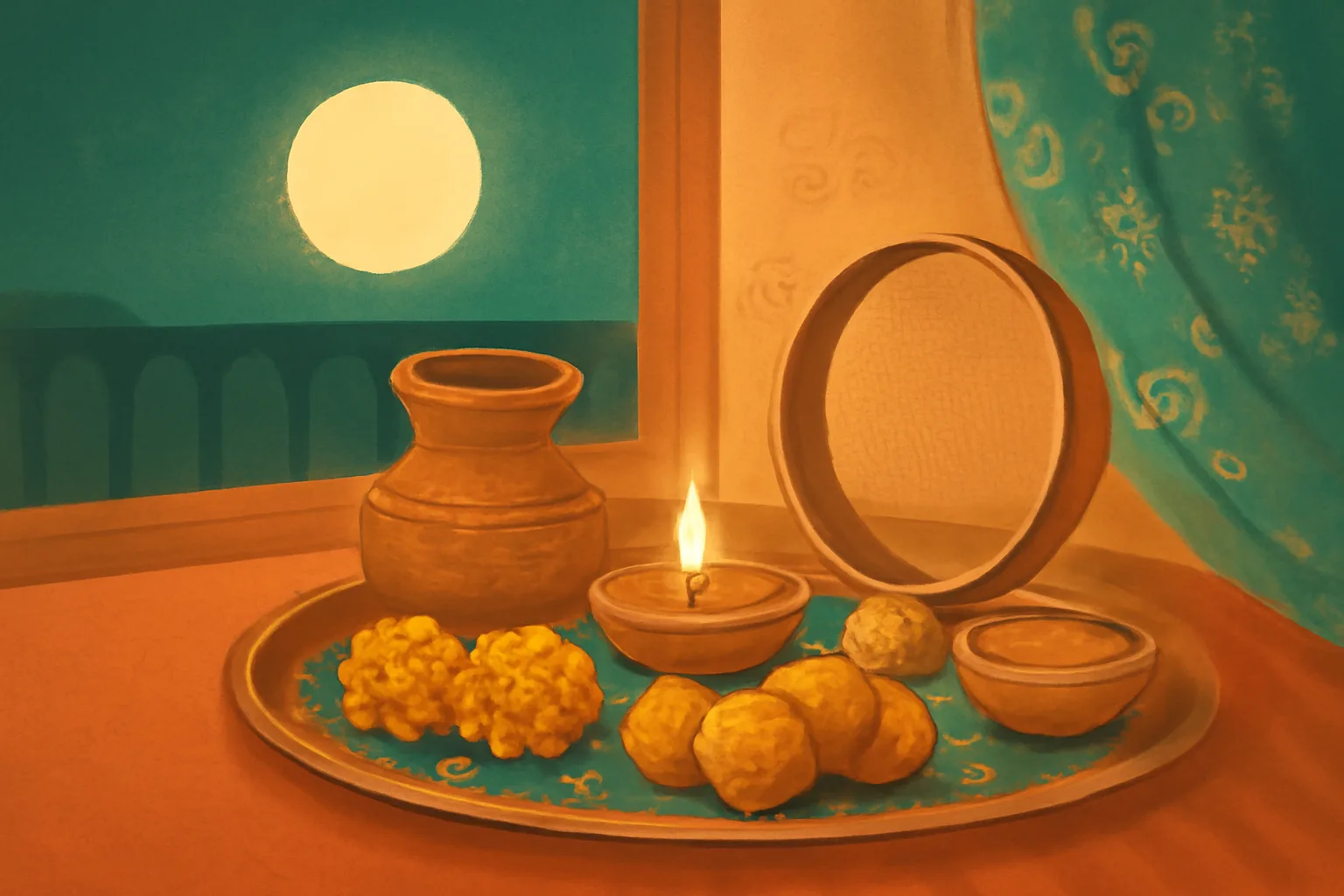
Karwa Chauth 2026 Date and Timing
Karwa Chauth 2026 falls on Thursday, 29 October 2026, according to the commonly followed North Indian Hindu calendar. In some traditions, the festival is also called Karaka Chaturthi or Karva Chauth. The date and exact timings are based on the lunar calendar, so local panchang calculations may differ, especially for people observing outside India. ([incredibleindia.gov.in](https://www.incredibleindia.gov.in/en/festivals-and-events/karva-chauth?utm_source=openai))
The vrat usually begins before sunrise, after the pre-dawn sargi meal, and ends after the moon is sighted in the evening. The puja window, sunrise, sunset and moonrise all depend on the observer’s city. For that reason, don’t rely on a timing shared in a family group unless it was calculated for your location.
Before the day begins, check a trusted local panchang or an astronomy-based moonrise listing for your city. Moonrise can vary between nearby places, and for some people living abroad, the local observance may fall on a different calendar date from India. The 29 October date is the verified India date supplied for this guide; local families should follow the calendar used by their community. ([kaalpanchang.com](https://kaalpanchang.com/festivals/karwa-chauth/muhurta?utm_source=openai))
What Karwa Chauth Means
At its heart, Karwa Chauth is associated with love, prayer, marriage, wellbeing and family bonds. The fast is the most visible part of the day, but it isn’t the whole meaning. For many observers, the festival is also about setting aside time for reflection, dressing up with care, gathering with other women and honouring relationships.
Traditionally, many married women fast and pray for their husband’s long life, safety and the wellbeing of the couple. That remains meaningful for many families, while others understand the festival more broadly as a shared prayer for love, health and companionship. Some couples fast together, some family members join the prayers, and some people participate without fasting at all.
Stories connected with Karwa Chauth vary by region and household. The story of Veeravati is widely shared, along with other vrat katha traditions that elders may read or tell during the evening puja. These stories are part of the festival’s devotional setting, but no single version should be treated as the only correct one.
A woman’s marital status, gender, health or level of observance does not decide how much love or commitment she holds. Some women do not fast, some couples create their own version, and some families skip parts of the ceremony. The festival can hold tradition and personal choice at the same time. ([iaewp.international](https://www.iaewp.international/online-course-materials/Interfaith%20Volume-3.pdf?utm_source=openai))
How the Day Usually Begins
The day often begins with sargi, a pre-dawn meal traditionally given by a mother-in-law or another elder. It may include fruit, sweets, dry fruits, savoury food, water and other dishes chosen by the family. In a joint family, sargi can feel like a small ceremony of its own, with blessings, gifts and conversation before sunrise.
After sargi, the fast commonly begins at sunrise. The traditional nirjala vrat is observed without food or water until the moon is seen, but practices differ. Many people choose a modified fast because of pregnancy, medication, health needs, work, travel or personal comfort. Not every household gives or receives sargi, and people living away from family may prepare their own pre-dawn meal.
A little planning makes the day kinder on the body. Eat a balanced meal before sunrise, include enough fluids, keep necessary medicines accessible and decide in advance how you will adapt the fast if needed. If you start feeling unwell, you can stop, drink water, eat something gentle or take medication. A ritual should never require you to ignore your health.
If you are supporting someone who is fasting, ask what would help instead of assuming. A quiet room, a reminder about the moonrise time, help with cooking or simply not making jokes about hunger can be more useful than grand gestures.
Puja, Mehendi and the Karwa Chauth Thali
Daytime preparations often include festive clothes, jewellery, mehendi and a decorated karwa, traditionally an earthen pot. Families may assemble a thali with a diya, roli or kumkum, rice, flowers, sweets and water. Some also include a sieve or channi, a small lota and items connected with their local puja custom.
The thali can be beautiful without being identical from one home to another. One family may use a painted karwa and a decorated sieve; another may keep the arrangement simple. The objects matter because of the prayer and intention attached to them, not because every household has purchased the same set.
In the evening, observers may sit together, exchange thalis or pass them around in a circle, and listen to or recite the Karwa Chauth vrat katha. These group customs are especially familiar in some North Indian communities, while other families pray at home or follow a different local sequence.
If you are preparing the thali for someone else, ask what their family normally uses. Decoration and shared celebration are meaningful parts of the day, but no single thali arrangement is compulsory everywhere.
The Evening Vrat Katha and Puja
The usual sequence begins with gathering before the puja muhurat. The karwa and other puja items are placed, the diya is lit, prayers are offered and the vrat katha is heard or read. The ceremony may include devotion to Goddess Parvati, Lord Shiva, Lord Ganesha and the Moon, depending on the family’s tradition. ([economictimes.indiatimes.com](https://economictimes.indiatimes.com/astrology/others/2026-karwa-chauth-date-puja-muhurat-moonrise-time-vrat-vidhi-and-fasting-rules/articleshow/135061862.cms?utm_source=openai))
The karwa is commonly associated with water, generosity, protection and the prayers of the day. In some families, it is decorated and included in a thali exchange; in others, it remains a quiet centrepiece for the home puja. Its meaning is carried through the family’s practice rather than one fixed arrangement.
If you are attending another family’s celebration, ask before handling ritual objects, joining a circle or taking part in a specific exchange. A simple question such as “Would you like me to join the thali round?” is respectful and avoids turning a private custom into a guessing game.
Some communities hold a group puja with several observers, while others pray at home or follow a temple-based tradition. Both can be sincere ways to observe the festival.
Moonrise and Breaking the Fast
The most familiar evening ritual takes place after moonrise. The observer views the Moon through a sieve or channi, offers water as arghya, says a prayer and then looks at their spouse or another loved one before breaking the fast. In many households, the spouse offers the first sip of water or a small bite of food.
The exact sequence differs. Some people first see the Moon, some offer water and prayers before using the channi, and some begin with a sip of water or a sweet according to family custom. Cloud cover can also make the wait longer, so it helps to check a reliable local moonrise listing rather than watching only the clock.
After a long fast, begin gently with water, fruit, soup or another light food before moving to a heavier dinner. There is no prize for eating quickly. Sit down, take your time and let the evening become a meal shared with people who have been waiting alongside you.
No ritual should require someone to remain unwell, dehydrated or without necessary medication. Breaking or modifying the fast is a valid personal and health decision, and a caring family will make room for it.
How Traditions Vary Across Families
Karwa Chauth is especially associated with parts of North and Northwest India, but celebrations differ across regions, communities and diaspora families. The festival may be known by slightly different names, and families may use different foods, stories, prayers and timings. A custom that feels essential in one home may be unfamiliar in another. ([incredibleindia.gov.in](https://www.incredibleindia.gov.in/en/festivals-and-events/karva-chauth?utm_source=openai))
Some people fast without water, while others take water or fruit. Some observe alone, some as a couple and some with a large joint family. A family may follow a local priest, an elder, a temple tradition, an online puja or a personal practice shaped by years of living away from home.
There are many ways to take part without fasting. You can help prepare the thali, join the puja respectfully, share the evening meal, accompany someone while they check the moonrise or send a warm message. If the family is celebrating online, you can join the call, listen to the katha or simply be present for the moonrise moment.
Don’t assume that every married woman is fasting, that every couple follows the same ritual or that someone’s choice reflects their love or commitment. Asking kindly is better than making a guess, especially when the person’s observance is private, modified or different from yours.
Respectful Karwa Chauth Wishes
A thoughtful message can honour the festival without making the fast sound like a competition. You might write, “Wishing you a peaceful Karwa Chauth filled with love, togetherness and beautiful moments.” It works well for a friend, relative or colleague when you know they observe the day but don’t know every detail of their tradition.
For a couple, try: “May your bond grow stronger with every celebration. Happy Karwa Chauth to you both!” For a family member or friend, a neutral option is: “Warm wishes for Karwa Chauth. May your day be meaningful, joyful and full of family warmth.”
Avoid jokes about hunger, pressure to fast, fertility, marital status or whether someone is a ‘good’ spouse. If you’re unsure how personal the message should be, ask, “Would you like a simple wish or something more traditional?” The right greeting is the one that makes the person feel seen, not examined.
You can also save a longer message in a Festival Captions, WhatsApp Status or Festival & Holiday Cards collection, then personalise it with the person’s name and your own memory. A short, genuine line is often more touching than a grand blessing copied without context.
A Thoughtful Way to Join In
Start with three simple steps: ask what the family follows, participate only where you are invited and support the observer’s choices—including a decision not to fast. You don’t need to know every word of the katha or every object in the thali. Curiosity, patience and good manners will carry you a long way.
If you’re helping at home, ask what needs doing. You might prepare the meal, arrange flowers, charge someone’s phone for the moonrise call or keep the evening free for the puja. A warm closing message could be: “I’m glad to celebrate this meaningful day with you—tell me how I can help.”
The festival’s human centre is simple: care for the people beside you. The day may include a full vrat, a shared dinner, a group puja, a private prayer or a small family gathering. The most respectful participation leaves room for care, choice and different traditions.