

Start With One Simple Contact List
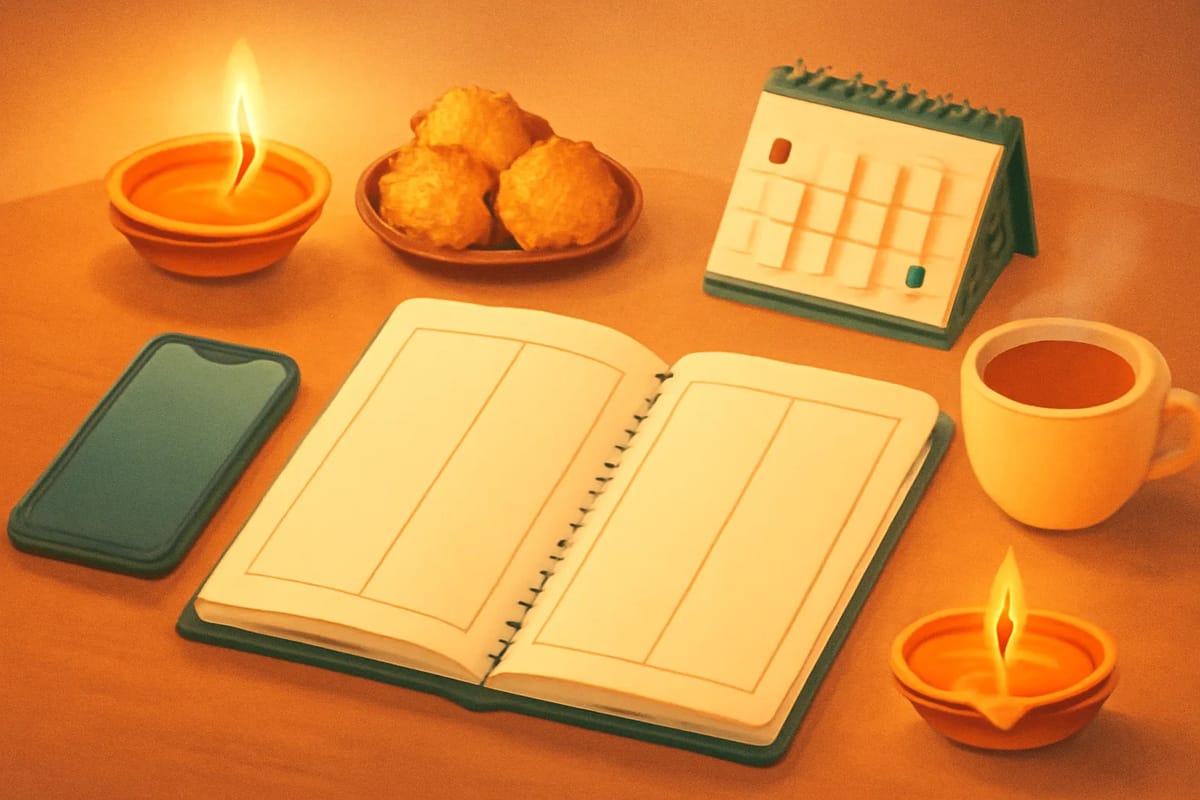
Begin with one small list instead of relying on memory, old chats and the sudden panic of seeing an unread message at night. Create four columns: person or group, relationship, preferred app and the Diwali-week day that suits them best. Notes, Google Sheets or even a WhatsApp draft can do the job. Keep it somewhere you can update next year.
Include family, friends, neighbours, colleagues, clients and loved ones living in another city or country. Don't assume everyone celebrates Diwali in exactly the same way, or at the same pace. A note such as "doesn't celebrate, send inclusive greeting" can be just as useful as a reminder to call your parents.
Add one more mark beside each name for message type: personal, shared or call. Your closest people deserve a line written just for them, while a larger work or residents' group may be perfectly happy with a thoughtful shared greeting. The point isn't to create an impressive spreadsheet; it's to stop important people from getting lost in the festive rush.
Match Each Person to the Right Day
Use Dhanteras on Friday, 6 November 2026, for wishes about prosperity, fresh starts, health and the festive season beginning. It can suit elders, business contacts and someone opening a new home or venture. Try, "Wishing you a bright Dhanteras, Uncle. May this new beginning bring good health, steady prosperity and many peaceful moments."
Naraka Chaturdashi, also called Choti Diwali, is a good fit for lighter notes about sweets, lights and getting ready. On Diwali day, Sunday, 8 November, save your warmest family, friendship and long-distance messages, with one line about what you genuinely value in the person. "Happy Diwali, Sana! Your calm, funny presence makes every celebration better. I hope the year ahead brings you plenty of light and laughter."
Govardhan Puja or Annakut, on Monday, 9 November, can suit messages centred on gratitude, food, community and shared abundance where that tradition is relevant to the recipient. Bhai Dooj, on Wednesday, 11 November, belongs naturally to siblings and sibling-like bonds, including cousins and chosen family. Customs and dates can vary by region, so check the local calendar before assigning a reminder. FreeWishes' festival calendar can help you keep the key dates together without making assumptions about how every family observes them.
Add One Personal Detail to Every Note
Before writing, choose one detail: a shared Diwali memory, the person's current project, a family tradition, a food they love or the distance between you. Then use a simple formula: greeting, specific detail, good wish. For example: "Happy Diwali, Riya! I still think about our terrace diyas and terrible rangoli competition. Wishing you a bright, peaceful year ahead."
For someone far away, name the distance without making the message heavy. You could write, "The house feels quieter without you this Diwali, but you're very much part of our celebrations. Sending you a big hug and hoping your week is full of good food and good company." That feels more caring than a generic line about missing someone.
A reusable opening is fine, but don't send the same intimate message to everyone. Keep the greeting, change the middle line and adjust the closing wish. "Happy Diwali, [Name]" can begin several messages; the reason you're grateful for that person should not be copy-pasted from one chat to the next.
Prepare Message Starters by Celebration
For Dhanteras, keep the wording bright and open-ended: "Wishing you a bright Dhanteras, [Name]. May this festive season bring [health/prosperity/a fresh start] and plenty of reasons to smile." Add a personal sentence for elders, clients or someone beginning a new chapter.
For Diwali day, try: "Happy Diwali, [Name]! I'm grateful for [specific memory or quality]. May your home be filled with light, laughter and a little extra mithai." The bracketed detail is where the message becomes yours. It might be "the way you always make everyone feel welcome" or "our late-night chats during a very strange year."
For Bhai Dooj, use: "Happy Bhai Dooj, [Name]. Thank you for being the person I can always [call/tease/count on]. Wishing you a year as wonderful as you are." Adapt the wording for sisters, brothers, cousins and chosen family rather than forcing every relationship into the same template.
For friends who don't celebrate Diwali, an inclusive note can be warm without pretending otherwise: "Thinking of you during the festive week and wishing you warmth, rest and many happy moments." You can also mention a shared plan, a recent success or simply say you hope they get a quiet evening.
Turn the Plan Into Reminders
Set two reminders for each day: one the evening before to personalise and queue the messages, and another at a sensible sending time on the day itself. Name them clearly, such as "Dhanteras, send elders and work contacts" or "Bhai Dooj, call sister and cousins." Clear labels save you from opening ten chats to work out why you set an alarm.
Schedule messages only when the app and the recipient's time zone make sense. A message sent at a reasonable hour in India may arrive very early or late for someone abroad. If you're unsure, leave it as a draft and send it when you're awake and available for replies.
Add a 15-minute calendar block for responses, especially for close family and friends. A thoughtful conversation is better than a message sent and forgotten. You can also use FreeWishes' reminders to keep the plan visible, then use its wish writer when you need help polishing a line without losing your own detail.
Make Group Messages Feel Less Generic
For a family group, mention the ritual that belongs to that group: decorating together, travelling home, making snacks or arguing cheerfully over cards. "Happy Diwali, everyone! Here's to our noisy kitchen, overfilled plates and the annual debate about who gets the last piece of kaju katli." One shared memory can make a group message feel genuinely familiar.
For a work group, keep the tone warm and professional. Thank people for their support and wish them rest and success without assuming everyone follows the same traditions. "Wishing everyone a peaceful festive week and a well-earned break. Thank you for the support, patience and teamwork this year."
For a residents' or community group, choose a practical, inclusive wish for a safe and joyful celebration rather than a highly personal line. If several people will receive the same image or card, write a different one-line caption for each important recipient. The picture may be shared; your caption is where the care shows.
Keep a Last-Minute Rescue Ready
Plans slip. Someone arrives unexpectedly, the sweets take longer than planned, or you simply realise at 10 p.m. that one dear person is still waiting for your message. Send a short, honest note instead of disappearing: "I'm late, but the wish is no less warm. Happy Diwali, [Name]. I hope the week has brought you light, laughter and good company."
If you missed a particular celebration, name it plainly: "I'm sorry I missed your Bhai Dooj message yesterday. I was thinking of you and hope you had a beautiful celebration." An apology doesn't need a long explanation. For people who value your voice more than polished wording, a voice note or quick call may feel much more natural.
After sending, update the list with anything useful for next year: a new address, a preferred name, a time-zone note or a family tradition. You'll be grateful for that tiny bit of housekeeping when the next Diwali week arrives.
Finish With One Warm Check-In
Save the final reminder for the person you most want to reach. It might be a parent, a sibling overseas, an old friend or someone who has had a difficult year. Don't leave that message until the last minute if it matters to you; give yourself enough time to write something honest and stay for the reply.
Then put the phone down and enjoy the celebration. A good Diwali week message plan isn't about sending the most messages. It's about giving each important person a moment that feels considered, even if that moment is only a few lines in a busy week.
May the light of this season stay with you well beyond the diyas.