

Start With the Children
Before you choose the activity, ask the children what would make the day enjoyable for them. They might want a game, a story, a small performance, an outing, a favourite meal or simply extra time with the adults they love. Their answers may surprise you. A child who usually asks for new toys might really want a parent to join their game without checking the phone.
Offer three or four choices that fit your time, space and energy. Younger children can vote by raising their hands, placing stickers beside pictures or drawing their choice. Older children can help compare the options and explain what they like about each one. Giving them a voice is more meaningful than revealing a fully planned surprise.
For a class, collect suggestions anonymously or ask students to discuss ideas in small groups. This gives quieter children a better chance to contribute than a loud, open-floor question. You may find that the most popular plan is not the most elaborate one, but something simple that lets many children take part.
Choose One Main Activity
Pick one activity that needs more togetherness than money. A treasure hunt can use clues hidden around the room, a talent hour can include jokes and drawings, and a story circle can invite children to add one line at a time. Other easy choices include a silly sports day, a board-game afternoon or a make-your-own snack station using familiar ingredients.
For a Children’s Day celebration idea at home, keep the plan pleasantly small: allow about 10 minutes to set up, 30 to 45 minutes to play or create, and some time afterwards to share what everyone enjoyed. A treasure hunt might have five clues, while a craft activity might use old newspapers, crayons and recycled boxes. The goal is a shared memory, not a display-worthy result.
Have a no-prep backup ready in case the weather, available space or everyone’s energy changes. Try Would You Rather?, charades or a family photo-and-story round. You could ask, “Which was funnier: the time we got caught in the rain or the time Grandpa wore two different slippers?” A backup plan keeps a small change from becoming a big disappointment.
Make It Work at Home
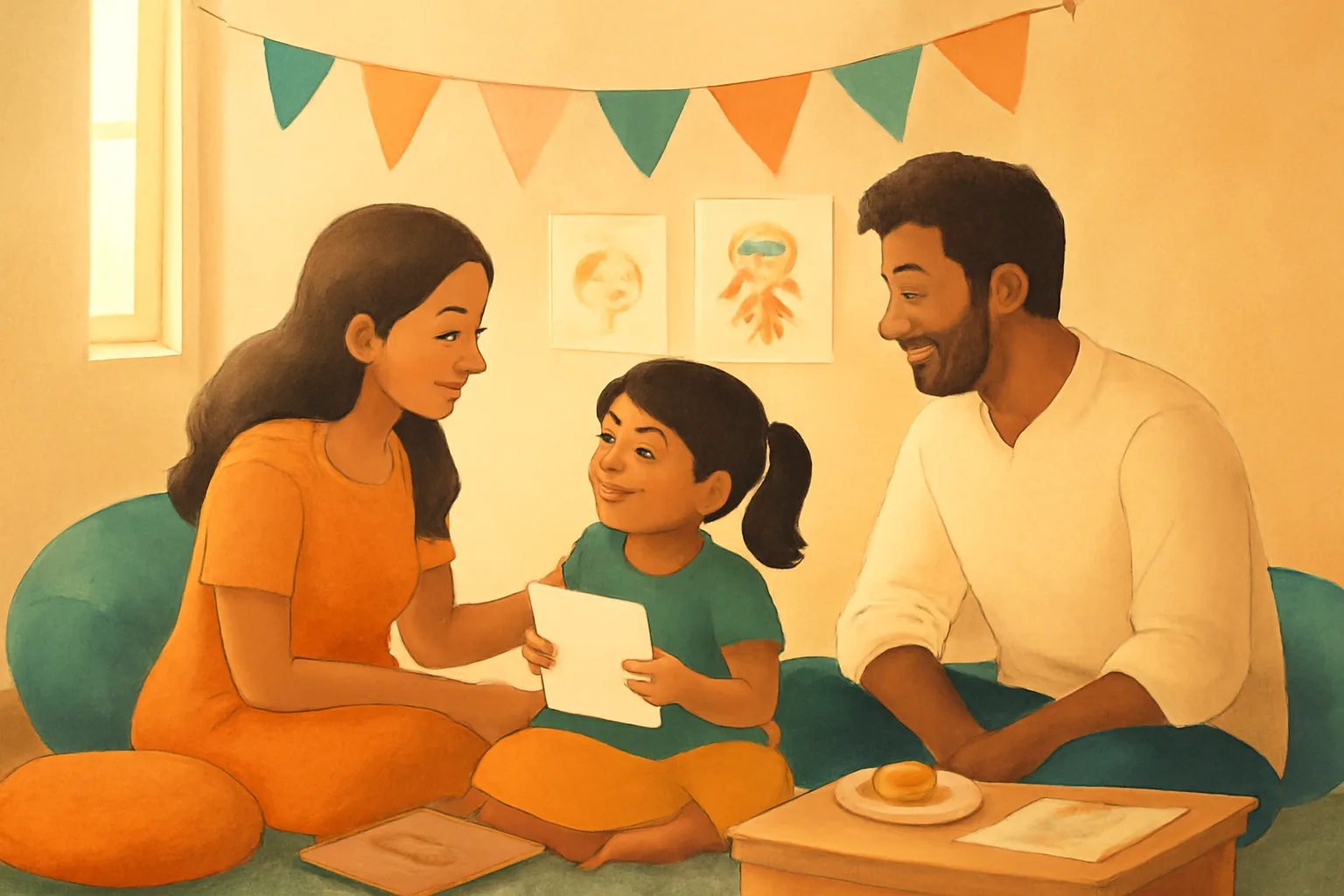
Create a small festive corner with paper bunting, the children’s drawings, cushions or a handwritten sign. Decorations can come from things already in the house, and they do not need to match. A few drawings taped at child height may feel more personal than a room filled with bought decorations.
Give children jobs that feel genuinely important. One child can choose the music, another can arrange plates, and someone else can explain the game rules or welcome guests. Older siblings might take photos, keep score or help younger children join in. Let children make some decisions too; a slightly unusual playlist or wobbly snack arrangement is part of the charm.
Keep food simple and familiar. Fruit, sandwiches, homemade snacks or a favourite family dish can all work, with alternatives for allergies, preferences and different family traditions. The celebration is not a test of cooking skills. If one child wants lemon rice, another wants noodles and everyone agrees on cut fruit, that is a perfectly respectable Children’s Day menu.
Make It Work in Class
A flexible 60- to 90-minute schedule can keep the class moving without making the day feel rushed. Begin with a welcome game, follow with a child-led activity, leave time for a snack or break, and close with a circle or appreciation moment. Keep a little space between activities so a delayed transition or an excited discussion does not throw everything off.
Let students lead wherever possible. They might host a round, read a story, demonstrate a hobby, choose a song or help teams play fairly. Leadership can be quiet too: handing out materials, drawing the scorecard, arranging books or helping a classmate understand the instructions all count as meaningful participation.
Avoid activities that require every child to perform, compete or speak publicly. Include drawing, puzzles, building, reading, helping roles and quiet observation. A child who doesn’t want to act out a scene can design its setting. Another may prefer to be the person who keeps the group organised. Children should feel included, not put on the spot.
Plan Without a Shopping List
Look around before buying anything. Chalk, old newspapers, crayons, recycled boxes, classroom books, cushions, music and everyday kitchen items can support plenty of games. A box can become a puppet theatre, newspapers can become costume material, and a stack of books can inspire a guessing game. The best supplies are often the ones children already know how to use.
If spending is needed, set a small budget and prioritise shared supplies over individual return gifts. One set of washable colours, a ball or ingredients for a shared snack can involve more children than a collection of small plastic presents. In a classroom, check what is already available and coordinate with co-teachers before purchasing anything.
Adults who want to give a keepsake can choose something personal and low-cost. A handwritten note, a bookmark made from scrap card, extra playtime or a promise of one-on-one time may be remembered long after a novelty toy is forgotten. You can write, “This weekend, you choose the story and I’ll read it with you,” and then make sure you keep that promise.
Write a Note They’ll Keep
A good Children’s Day note says something specific. Mention a quality, an effort, a funny habit or a moment you genuinely appreciated instead of writing only, “You are special.” Try, “I noticed how patiently you showed your cousin the puzzle,” or “Your dramatic storytelling at breakfast made everyone laugh.” A child should be able to recognise themselves in the message.
At home, this simple template can help: “Dear __, I love the way you __. You made me smile when __. This Children’s Day, I hope you remember __. With love, __.” Fill it with a real detail, such as their careful drawings, brave first day at a new activity or habit of saving the best mango piece for someone else.
For a class, write short individual notes or appreciation cards that celebrate different strengths. One card might recognise curiosity, another kindness, patience, imagination, courage or helpfulness. Avoid ranking children or using the same prize-like language for everyone. “You ask thoughtful questions” can mean just as much as “You helped the whole group.”
Use a Simple Day-Of Checklist
One week before Children’s Day, ask for ideas, choose the main activity and check allergies, accessibility needs, permissions and available materials. For a class, confirm which adults will supervise each part. At home, check that the plan suits everyone’s schedules and energy. This short preparation prevents the celebration from becoming a last-minute scramble.
The day before, prepare the activity area, write the cards, charge a phone or speaker if needed, and confirm the plan with families or co-teachers. Keep materials together in one box or bag. If food is involved, label ingredients where helpful and arrange suitable alternatives before the celebration begins.
On the day, keep the schedule loose. Take photos only with permission, and don’t let documenting the moment replace enjoying it. Leave a few minutes for children to say what they liked, what made them laugh or what they would change next time. Their answers can guide the next family gathering or class celebration.
End With Time Together
Close with a small ritual so the day has a gentle finish. Try a group cheer, a shared snack, a read-aloud, a gratitude round or one sentence from each child about the best part. You could ask everyone to complete, “My favourite moment was…” Children who do not want to speak can draw their answer or tell it privately to an adult.
Remind children that being celebrated does not depend on receiving a gift. Attention, play, encouragement and kind words count too. A child may remember the adult who sat on the floor for a game, the teacher who noticed their quiet help or the sibling who listened to their entire story.
Plans may go wrong. The craft may collapse, the weather may change and someone may dislike the snack. Keep the note, the laughter and the connection. Children’s Day does not have to look perfect to feel special, and a simple plan often leaves more room for the part children value most: having the important people in their world fully present.